
Floodwater can carry sewage, microorganisms, chemicals, and other contaminants that make exposed food unsafe to eat. The U.S. Food and Drug Administration (FDA) advises consumers to discard food that may have contacted floodwater unless it is protected by certain intact, waterproof commercial packaging. Power outages create a second concern because refrigerated and frozen foods can become unsafe when they remain too warm for too long.
Food inspection should therefore be part of the recovery process once it is safe to enter the home. While arranging water cleanup after severe storms, homeowners can separate questionable food from unaffected supplies, determine how long refrigeration was lost, and clean food-contact surfaces before returning the kitchen to normal use.
Step 1: Treat Floodwater Contact as a Serious Contamination Risk
Start by determining where the water traveled. Food does not have to look dirty to be unsafe. Guidance from the FDA stresses that appearance and smell cannot reliably establish whether flood-exposed food is safe.
Any food in paper, cardboard, cloth, or similar absorbent packaging should be discarded if floodwater reached it. This includes cereal boxes, flour and sugar bags, boxed pasta, and other dry pantry products. Even when the food inside appears dry, contaminated water can penetrate or collect around packaging that cannot be effectively sanitized.
Step 2: Sort Pantry Goods by Container Type
Next, inspect shelf-stable products individually. The FDA identifies undamaged, commercially prepared foods in all-metal cans and retort pouches as examples of packages that may be salvageable after proper cleaning and sanitizing.
Other closures require a more cautious approach. Discard flood-exposed containers with screw caps, snap lids, pull tops, crimped caps, flip tops, or similar closures. Home-canned foods should also go. Water and contaminants can enter areas around these closures that are difficult to clean adequately.
Check metal cans closely before deciding to keep them. The FDA recommends discarding cans showing swelling, leakage, punctures, holes, fractures, extensive deep rust, or severe crushing and denting. When the integrity of a container is uncertain, disposal is the safer choice.
Step 3: Sanitize the Containers That Can Be Saved
Salvageable cans and retort pouches still need careful treatment. The FDA recommends removing detachable labels because dirt and microorganisms may remain underneath them, then washing the containers with soap and water and rinsing them with safe water.
Containers can then be sanitized using the method recommended by public health guidance. Understanding different sources of food contamination also helps explain why careful handling matters when food packaging has been exposed to questionable water or surrounding materials. One FDA procedure calls for immersing salvageable containers in boiling water for two minutes. Another uses a sanitizing solution made with unscented household bleach at the specified concentration. After treatment, containers should air-dry before storage and be relabeled with identifying information and expiration dates when original labels were removed.
Step 4: Work Out How Long the Refrigerator Lost Power
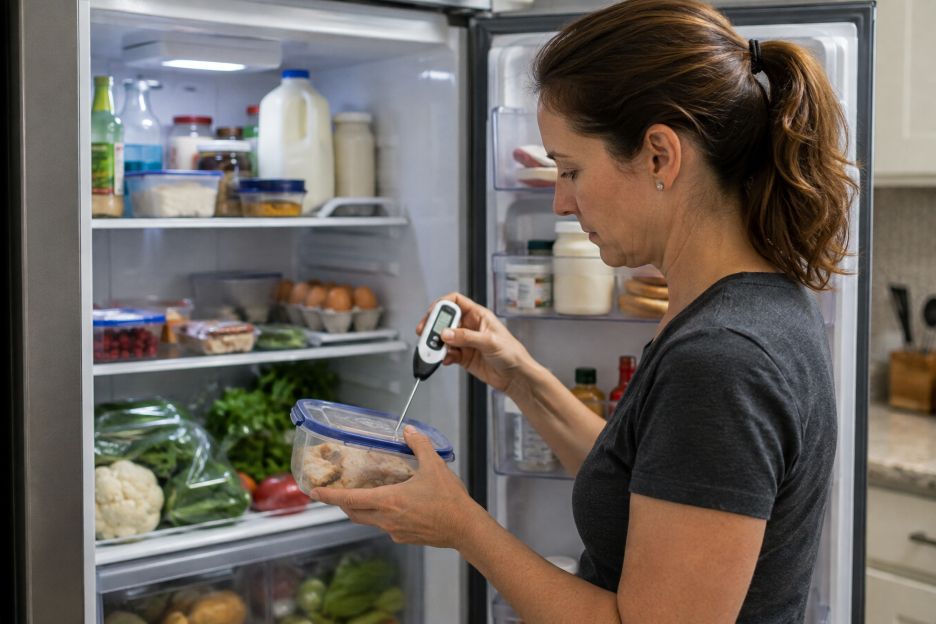
Floodwater may never reach the refrigerator, yet a lengthy power outage can still compromise its contents. The FDA reports that an unopened refrigerator generally keeps food cold for about four hours. Keeping the door closed helps preserve the cold air for as long as possible.
Once electricity returns, use an appliance or food thermometer rather than guessing. The Centers for Disease Control and Prevention (CDC) recommends keeping refrigerators at 40°F or below and freezers at 0°F or below under normal operating conditions.
Which Refrigerated Foods Need the Most Attention?
Perishable foods require particular care. Meat, poultry, seafood, milk, eggs, cooked leftovers, and similar products can support bacterial growth when temperature controls fail. FDA guidance states that perishable refrigerated foods that have been above 40°F for four hours or longer should be discarded.
Do not taste questionable food to decide whether it is safe. Harmful microorganisms may be present without producing an obvious change in smell, flavor, or appearance.
Step 5: Check the Freezer Separately
A freezer gives households more time during an outage. Information from the FDA indicates that a full, unopened freezer can maintain its temperature for approximately 48 hours, while a half-full freezer generally provides about 24 hours.
If an appliance thermometer shows that the freezer remained at 40°F or below, its food can generally be refrozen. When no thermometer was available, FDA guidance says food that still contains ice crystals or measures 40°F or below can generally be refrozen or cooked. Quality may decline after thawing and refreezing, even when the food remains safe.
Step 6: Clean the Kitchen Before Restocking
Food decisions are only part of restoring a flooded kitchen. Shelves, countertops, dishes, utensils, and other food-contact areas may also have been exposed. The FDA recommends washing metal pans, ceramic dishes, utensils, and countertops with soap and water before rinsing and sanitizing them appropriately.
Some materials cannot be reliably restored after direct floodwater contact. FDA guidance recommends discarding wooden cutting boards, wooden utensils, plastic utensils, baby bottle nipples, and pacifiers that were exposed. Keeping contaminated objects away from cleaned areas also helps prevent recontamination during recovery.
A Simple Rule When Safety Cannot Be Confirmed
Storm recovery can make throwing away groceries feel wasteful, especially when packaging appears intact. The more useful question, however, is whether the food’s safety can reasonably be established. Flood exposure, damaged packaging, uncertain refrigeration temperatures, and unknown outage duration are all reasons for caution.
Once damaged food has been removed and kitchen surfaces have been properly cleaned, households can begin restocking with greater confidence. Future storm preparation can also make the next decision easier. Appliance thermometers, coolers, frozen gel packs, bottled water, and shelf-stable foods stored above potential flood levels are among the precautions recommended by the FDA. A little preparation can reduce uncertainty when severe weather disrupts both the home and its food supply.